

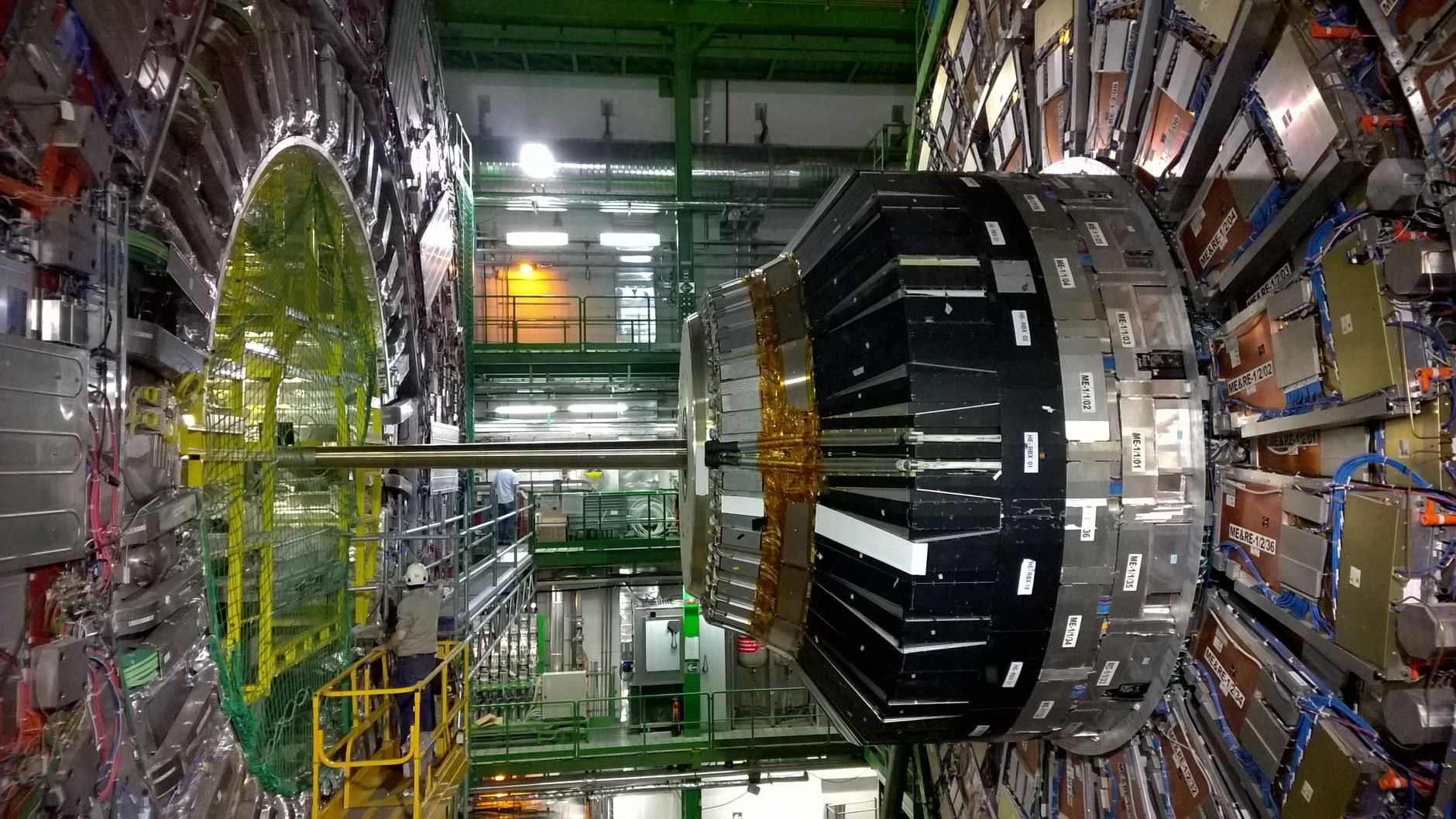
Particle Detector for $100: Simple Device Tracks Invisible Particles
A particle detector for $100 is revolutionizing the way students can track invisible particles. This innovative device is pocket-sized and affordable, making science accessible to all.
Introduction to the Particle Detector
In a remarkable breakthrough, a student has developed a particle detector for $100, showcasing the potential of affordable science tools. This innovative device is compact and easy to use, making it accessible for both educational purposes and amateur enthusiasts.
The particle detector operates by utilizing simple yet effective technology to track invisible particles, which are often undetectable to the naked eye. Here are some key features of this groundbreaking device:
- Affordability: At just $100, it democratizes access to particle detection.
- Portability: Its pocket-sized design allows users to carry it anywhere.
- Ease of Use: The device is designed for users of all skill levels, from beginners to advanced researchers.
- Educational Value: It serves as a fantastic learning tool for students interested in physics and engineering.
This particle detector not only exemplifies innovation but also encourages curiosity about the unseen world around us.
How It Works: The Science Behind It
The particle detector for $100 operates on the principles of ionization and detection of charged particles. At its core, the device utilizes a simple yet effective design that includes a Geiger-Müller tube, which is sensitive to particles such as alpha, beta, and gamma rays.
When a charged particle passes through the tube, it collides with gas molecules, creating ion pairs. This ionization process results in a cascade of electrons, which generates a measurable electrical pulse. The device is equipped with a circuit that amplifies these pulses, allowing for the detection and display of particle events.
In addition, this compact particle detector features a user-friendly interface, making it accessible to students and hobbyists alike. The low-cost materials do not compromise its effectiveness, enabling users to explore the fascinating world of particle physics without breaking the bank.
- Geiger-Müller tube for particle detection
- Ionization process for generating electrical pulses
- User-friendly interface for easy operation
Benefits of Building Your Own Detector
Building your own particle detector for $100 offers several advantages that can enhance your understanding of particle physics. One of the most significant benefits is the hands-on experience gained during the construction process.
When you create your own device, you develop a deeper appreciation for the principles of detection and the underlying science. This knowledge can be invaluable for students and enthusiasts alike. Additionally, building a particle detector fosters problem-solving skills, as you may face challenges that require creative thinking and adaptation.
Another important benefit is cost-effectiveness. Traditional particle detectors can be prohibitively expensive, often running into the thousands of dollars. A low-cost option allows more individuals, especially students and hobbyists, to engage with complex scientific concepts.
Moreover, having a portable, pocket-sized device enables easy experimentation in various environments. This accessibility encourages exploration and experimentation, which can lead to fascinating discoveries about the fundamental particles that make up our universe.
Real-Life Applications of Particle Detection
The development of a particle detector for $100 has opened up numerous real-life applications that were previously accessible only to professionals in specialized laboratories. This affordable device allows hobbyists, students, and researchers to track invisible particles, making science more accessible to everyone.
Some notable applications include:
- Educational Purposes: Schools and universities can incorporate this low-cost particle detector into their physics curriculum, offering students hands-on experience with particle detection and radiation.
- Environmental Monitoring: Users can deploy the device to monitor radiation levels in various environments, helping to ensure public safety in areas near nuclear facilities or other radiation sources.
- Citizen Science Projects: Amateur scientists can use the particle detector for community-based research, contributing valuable data to studies on cosmic rays and other phenomena.
- DIY Enthusiasts: The simplicity of building a particle detector for $100 appeals to makers and hobbyists interested in exploring the fundamentals of physics.
As interest in science continues to grow, such devices democratize the field, fostering a new generation of scientists.
Student Innovations in Science
In a remarkable display of ingenuity, students are leading the way in the field of particle detection. With a particle detector for $100, these budding scientists are proving that advanced technology can be accessible to everyone. The device, which is compact and portable, allows users to explore the fascinating world of subatomic particles without breaking the bank.
Students have taken it upon themselves to innovate and push the boundaries of science through hands-on projects. By using affordable materials and leveraging online resources, they have successfully created low-cost alternatives to traditional particle detectors. This not only fosters a deeper understanding of particle physics but also encourages teamwork and problem-solving skills among peers.
Furthermore, these innovations are inspiring a new generation of scientists. As students experiment and share their findings, they are contributing to a growing community that values creativity and accessibility in scientific research.
With such initiatives, the future of particle detection looks brighter than ever.
The Future of Affordable Science Tools
The emergence of affordable science tools like the particle detector for $100 signals a transformative shift in educational and research landscapes. As technology becomes more accessible, aspiring scientists are empowered to explore complex phenomena without the burden of high costs.
The implications are profound:
- Increased Engagement: Students and amateur scientists can actively participate in experiments, fostering a deeper understanding of fundamental concepts.
- Innovation and Creativity: The ease of building such devices encourages inventive approaches to problem-solving and experimentation.
- Wider Research Opportunities: More individuals can contribute to scientific research, particularly in fields like physics and environmental science.
As more affordable tools become available, the gap between theory and practical application narrows, making science more inclusive. This democratization of technology not only inspires the next generation of scientists but also enhances our collective ability to address pressing global challenges.
Conclusion: Empowering Young Scientists
In conclusion, the development of a particle detector for $100 symbolizes a significant leap in making science accessible to young innovators. This affordable device empowers students to delve into the realm of particle physics, allowing them to explore concepts that were once limited to advanced laboratories.
By providing a hands-on learning experience, students can engage with the scientific method, fostering critical thinking and problem-solving skills. As they build and experiment with their own detectors, they not only gain practical knowledge but also develop a passion for science that could lead to future careers in STEM fields.
The implications of such devices extend beyond education, encouraging young scientists to contribute to real-world applications in areas like environmental monitoring and medical research. As technology continues to advance, the future looks bright for affordable science tools that inspire the next generation of thinkers and innovators.
As more students embrace these DIY projects, the landscape of science education will transform, creating a community of curious minds eager to uncover the mysteries of the universe.
The particle detector for $100 is an innovative solution for hobbyists and educators looking to explore the world of subatomic particles. With its affordable price, this particle detector for $100 makes advanced scientific concepts accessible to everyone.
Photo by Pietro Battistoni on Pexels
Read the original
NIT Srinagar Observatory: Best Proven Facility for Astronomy · Noida DM Fine: Wrong Decision, Proven Consequences · Largest Government Organisations in India: The Best Proven Facts
